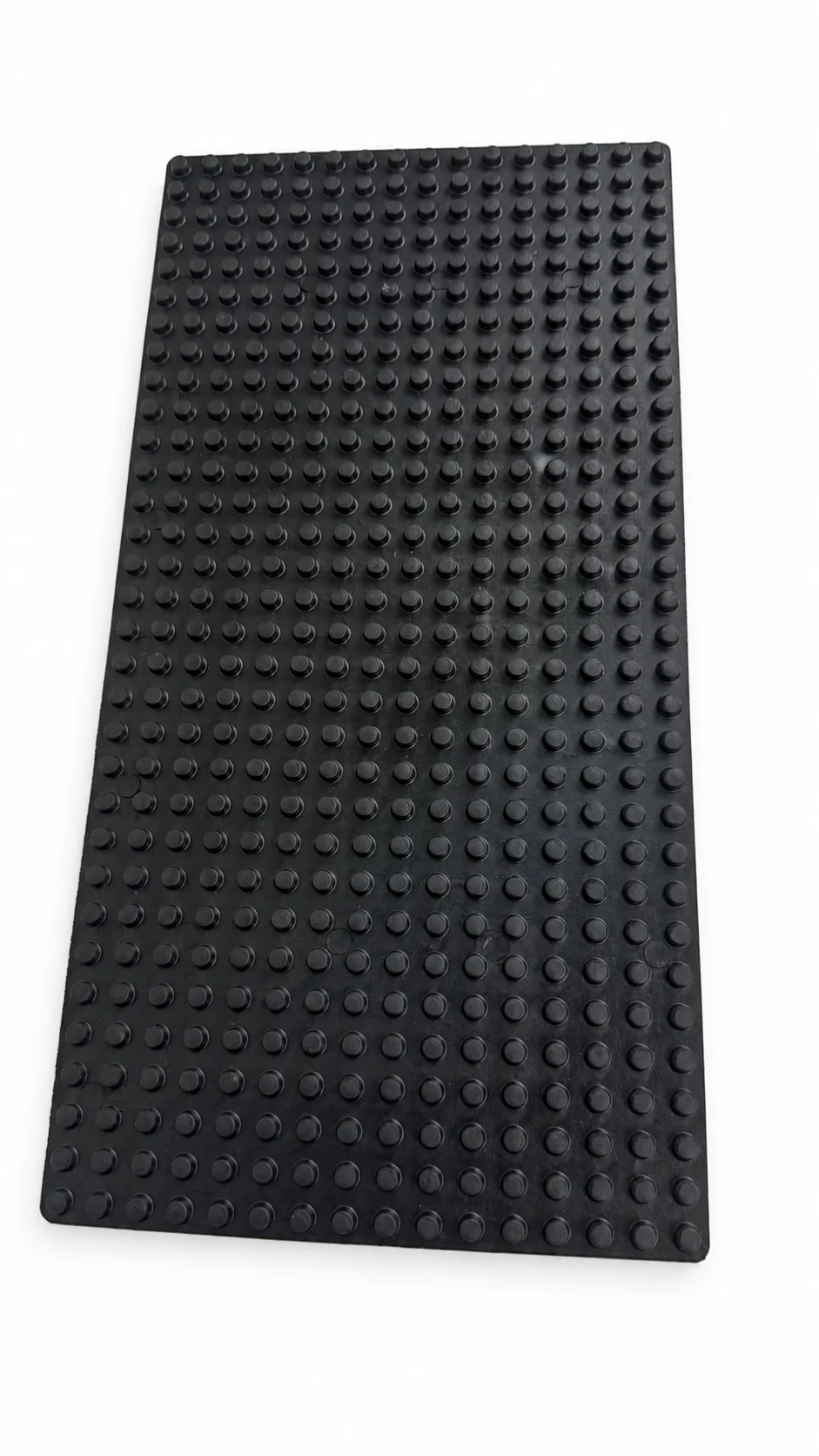
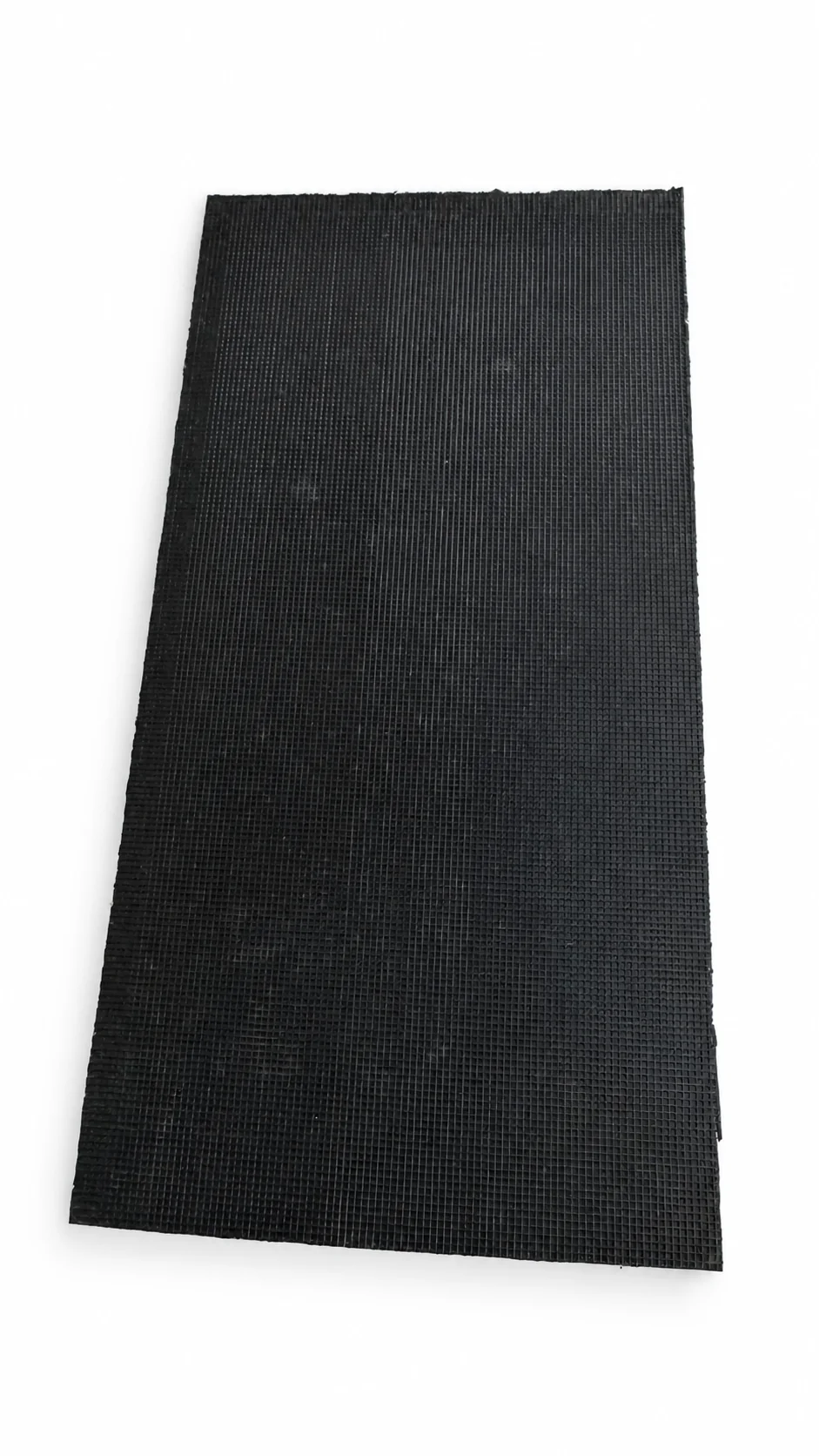
A-01 Single-Sided Raised-Dot Pad
Raised dots on the front; fine-grid texture on the reverse. Front and reverse photographs show the confirmed single-sided structure.
Inquire about A-01 →Industrial equipment support pads
Compare raised-dot and ribbed rubber anti-vibration pads for machinery support and cushioning. Choose a single-sided, double-sided or cuttable structure, then confirm length, width and total thickness. Send your drawing or photos, equipment weight, number of support points and quantity for review and a quote.
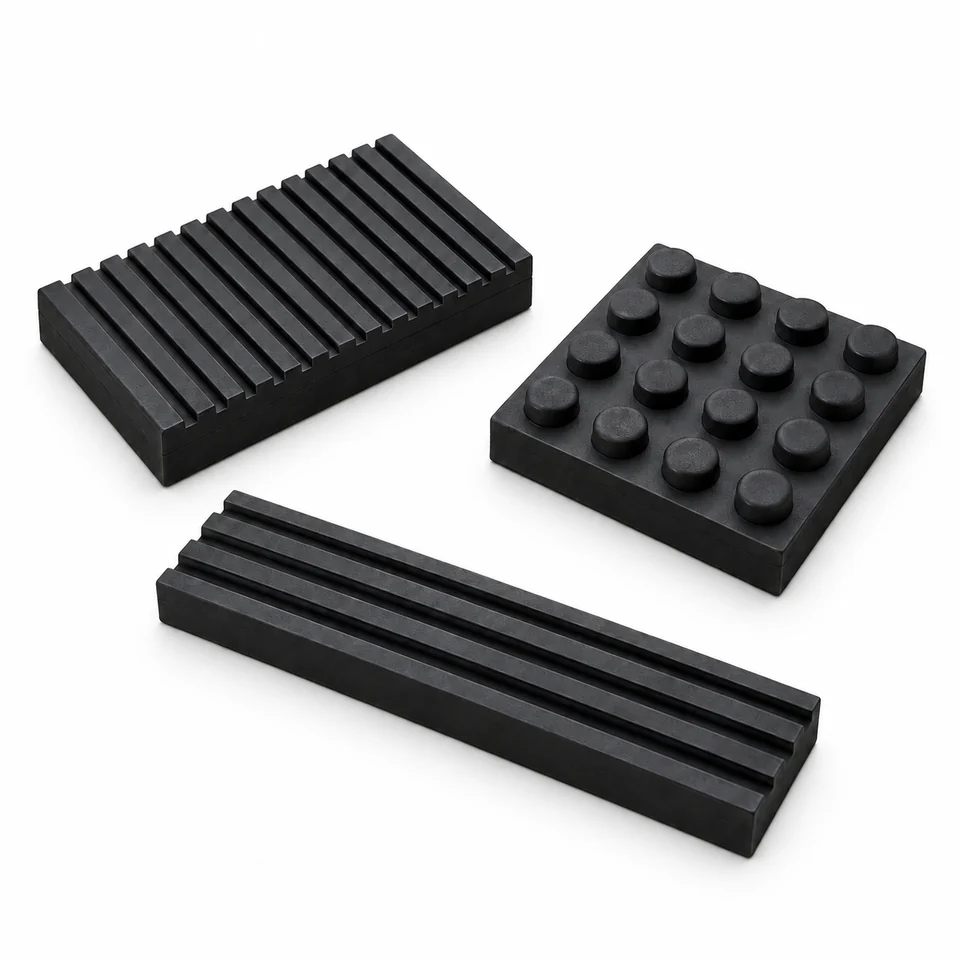
Check both contact surfaces when replacing an existing pad. Specify length, width and total thickness, including any ribs or raised dots. For a cut size or holes, provide a drawing showing cut lines, hole positions and tolerances. The surface pattern alone does not establish allowable load or vibration-isolation performance.
Choose the structure first
Use the closest structure as a starting point. Confirm dimensions, rubber material, hardness and mounting details against the final drawing or sample.
Raised dots on the front; fine-grid texture on the reverse. Front and reverse photographs show the confirmed single-sided structure.
Inquire about A-01 →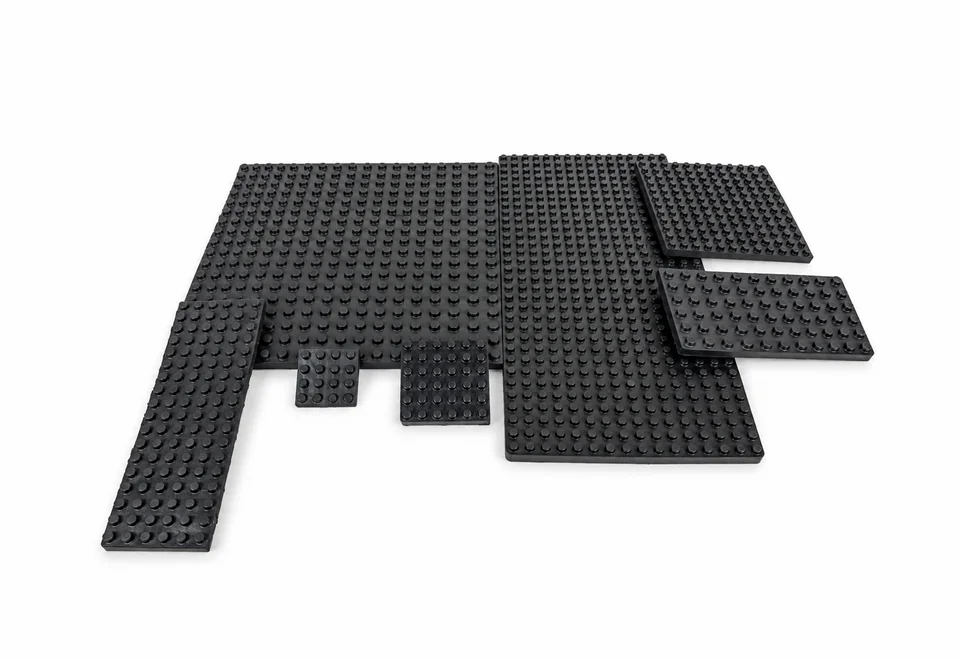
Raised-dot contact surfaces on both faces. General raised-dot references are listed separately from the 6×6 cuttable format.
Inquire about A-02 →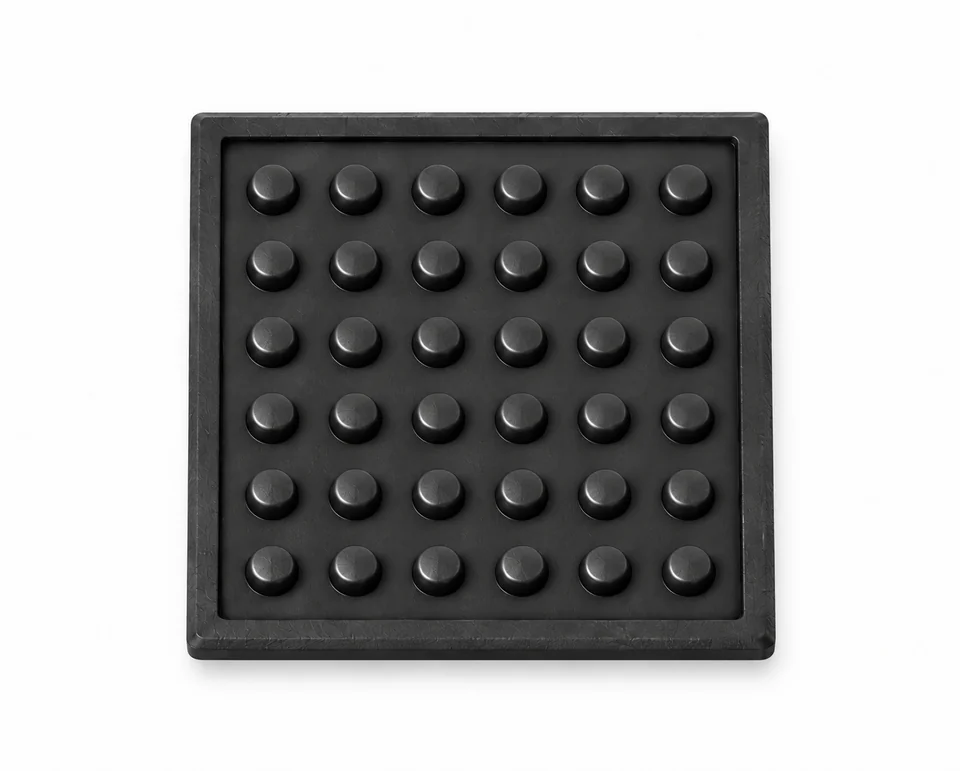
6×6 unit structure illustration — dimensions and cutting details require confirmation
6×6 raised-dot pattern: 36 dots per unit. Cuttable format; confirm unit size, cut lines and edge finish against the drawing or sample.
Inquire about B →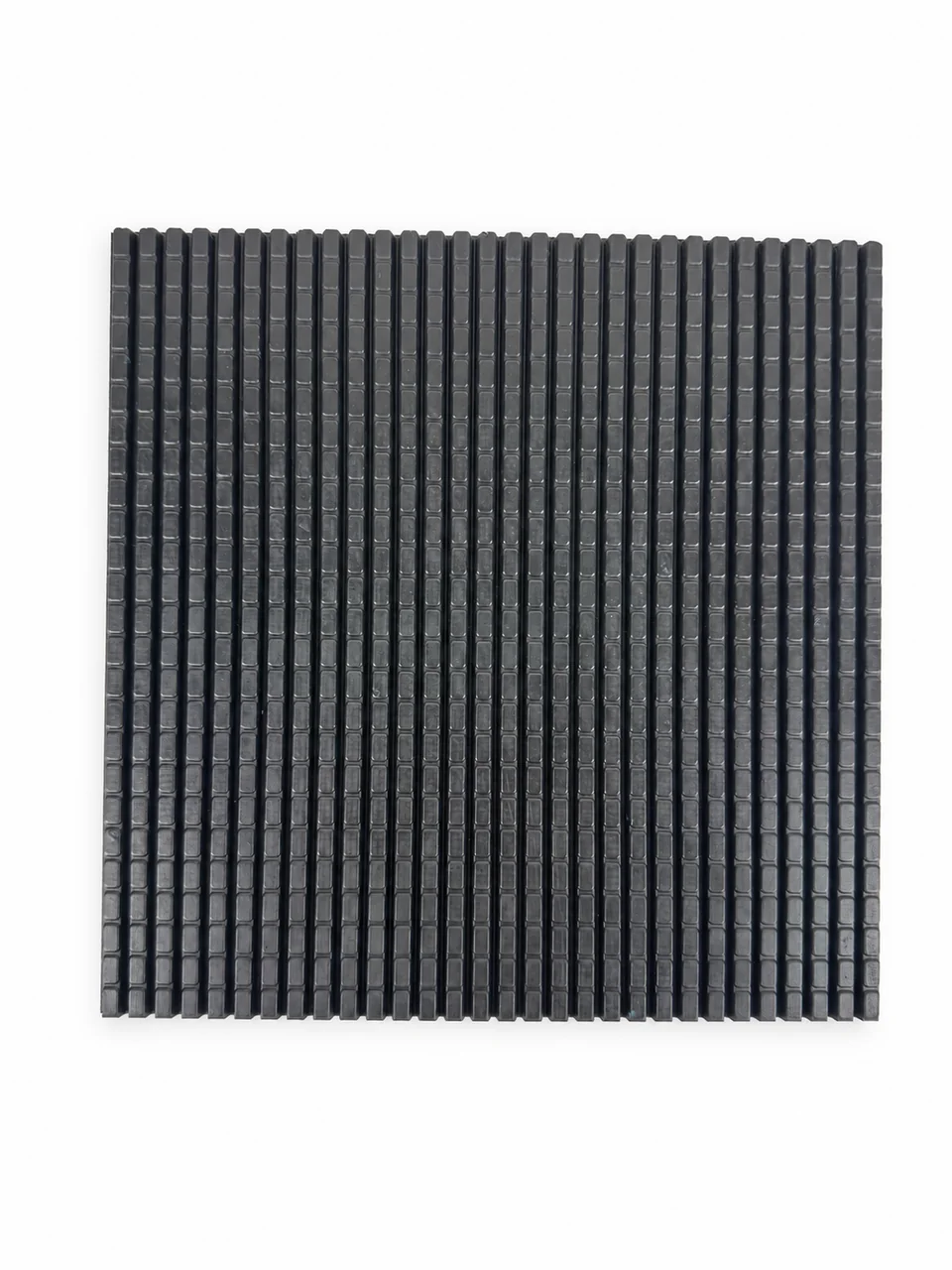
Ribs on one face and a fine-grid reverse. The shared reverse image is a texture reference, not a dedicated C-01 photograph.
Inquire about C-01 →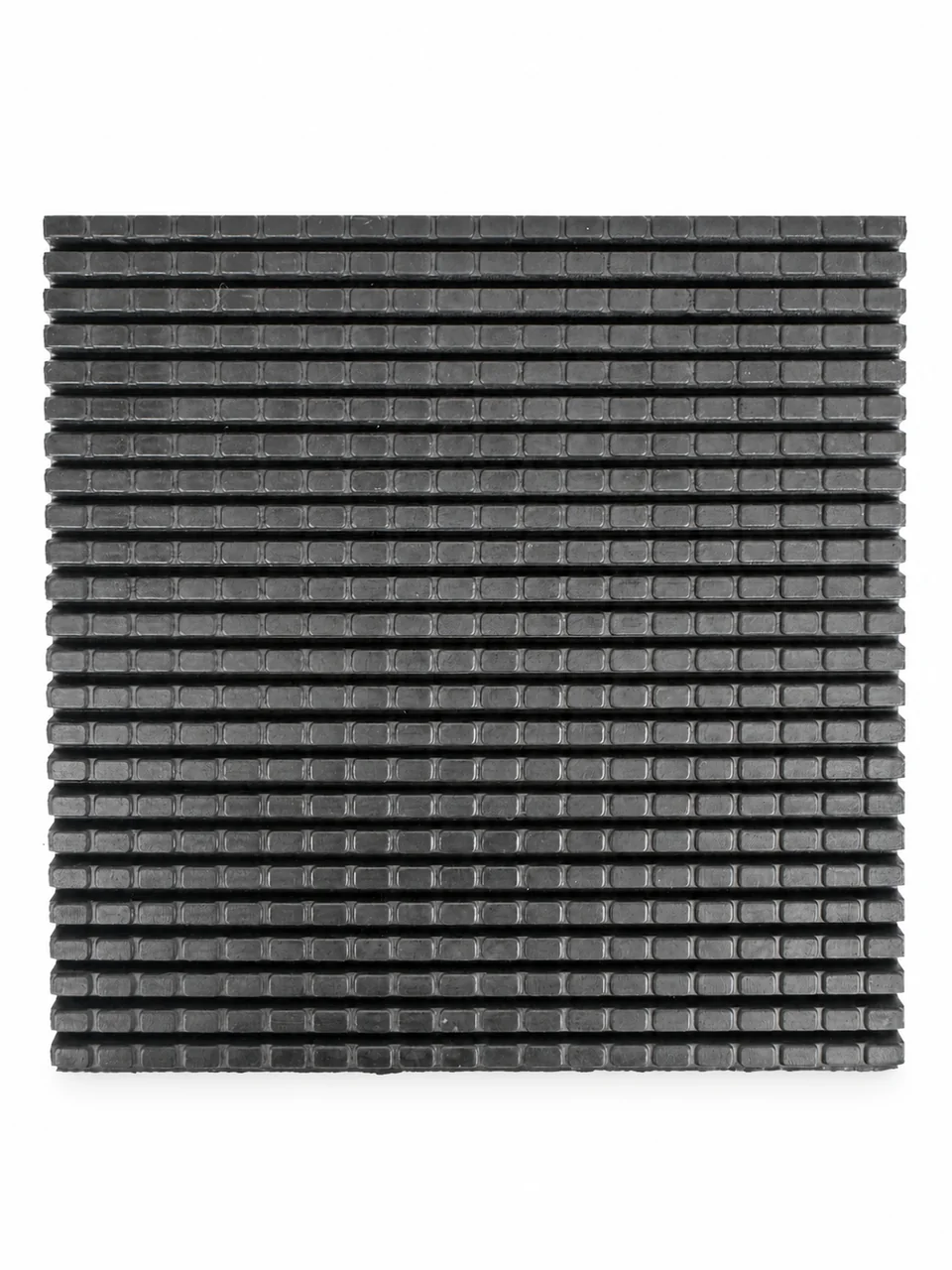
Ribbed contact surfaces on both faces. Confirm thickness and the actual rib profile against the drawing or sample.
Inquire about C-02 →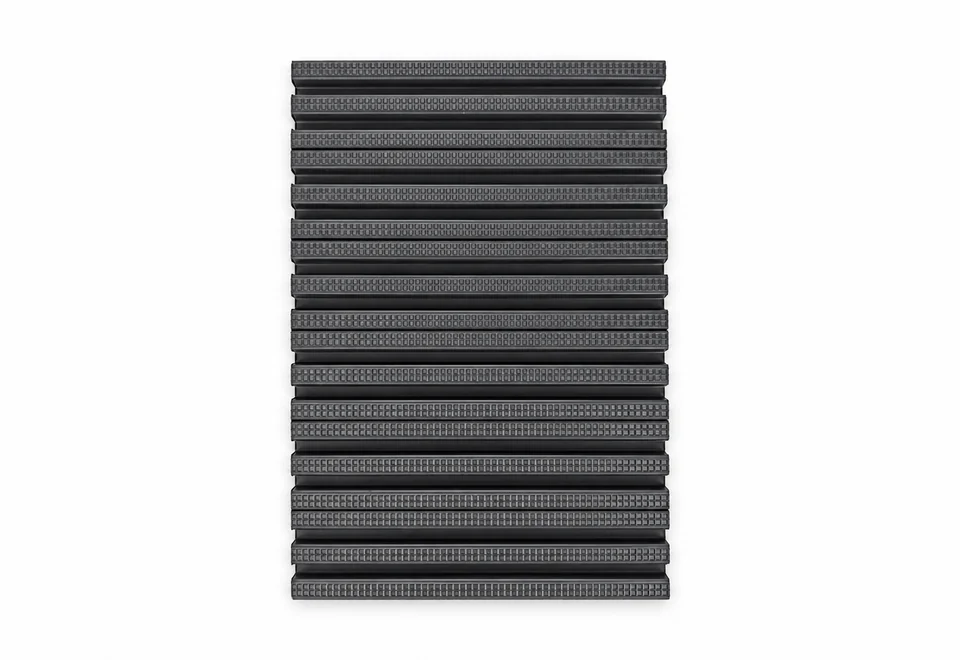
Deep grooves between high-section ribs. Heavy-duty describes the structure, not a verified load rating.
Inquire about D →Catalog specifications
All dimensions below are L × W × T in mm unless stated otherwise. These are catalog references, not a stock or load-rating guarantee. Final dimensions, tolerances, material and Shore A hardness must be confirmed for the order.
Common material: synthetic rubber. Typical hardness: 65 ± 5 Shore A. Custom materials and hardness are confirmed by order. Provide load conditions and exposure to oil, weather, temperature or chemicals so suitability can be reviewed.
Equipment support, cushioning and contact between machinery and the installation surface. Provide equipment weight, number of support points, dimensions, operating environment and quantity. Vibration-isolation performance and allowable load require application-specific review; no numerical performance rating is stated.
Expand a model to view its reference sizes. Confirm the selected size and thickness combination before ordering.
Have only a sample or photos? Send the details you have and mark unknown specifications as unknown.
Send Your Pad RequirementsBilingual references for six pad structures, not to scale. T is the unloaded overall thickness between the outermost contact surfaces, including raised dots, ribs and reverse texture; it is not base-sheet thickness.
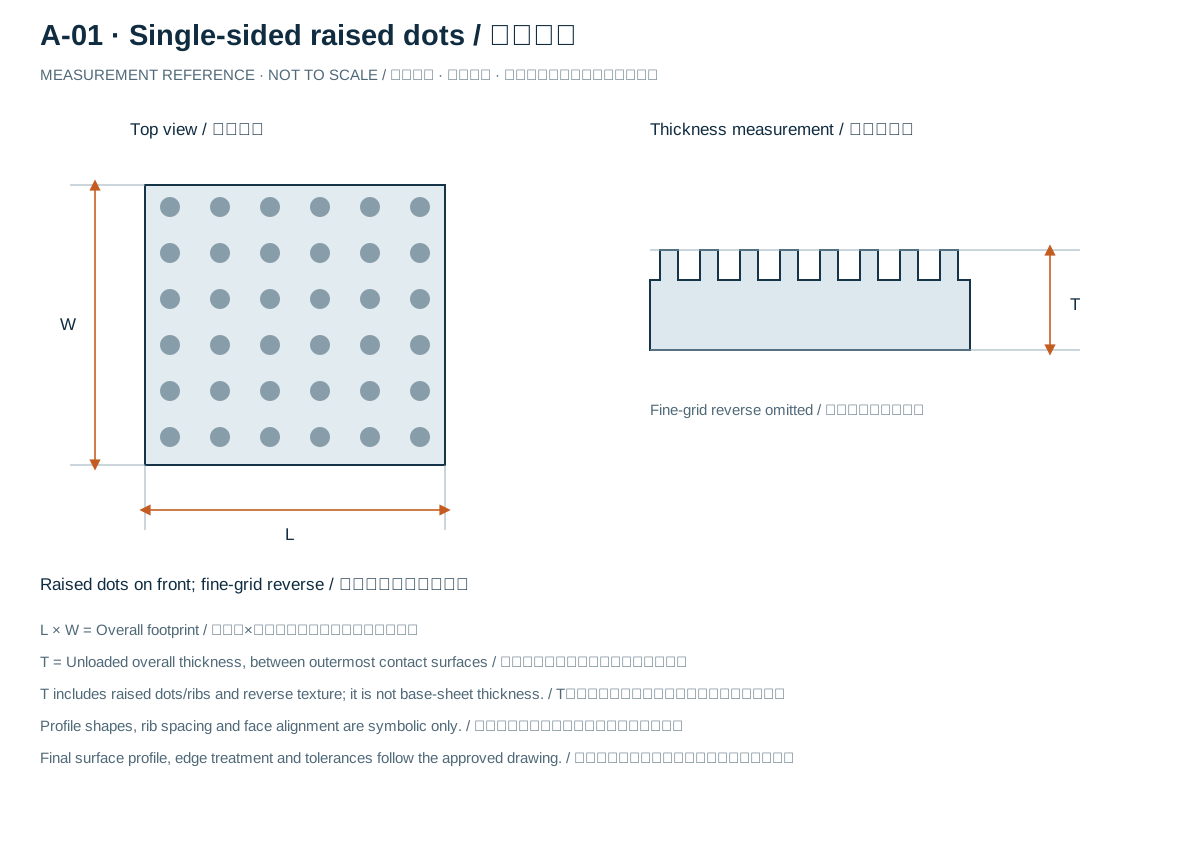 Tap diagram to view full size ↗
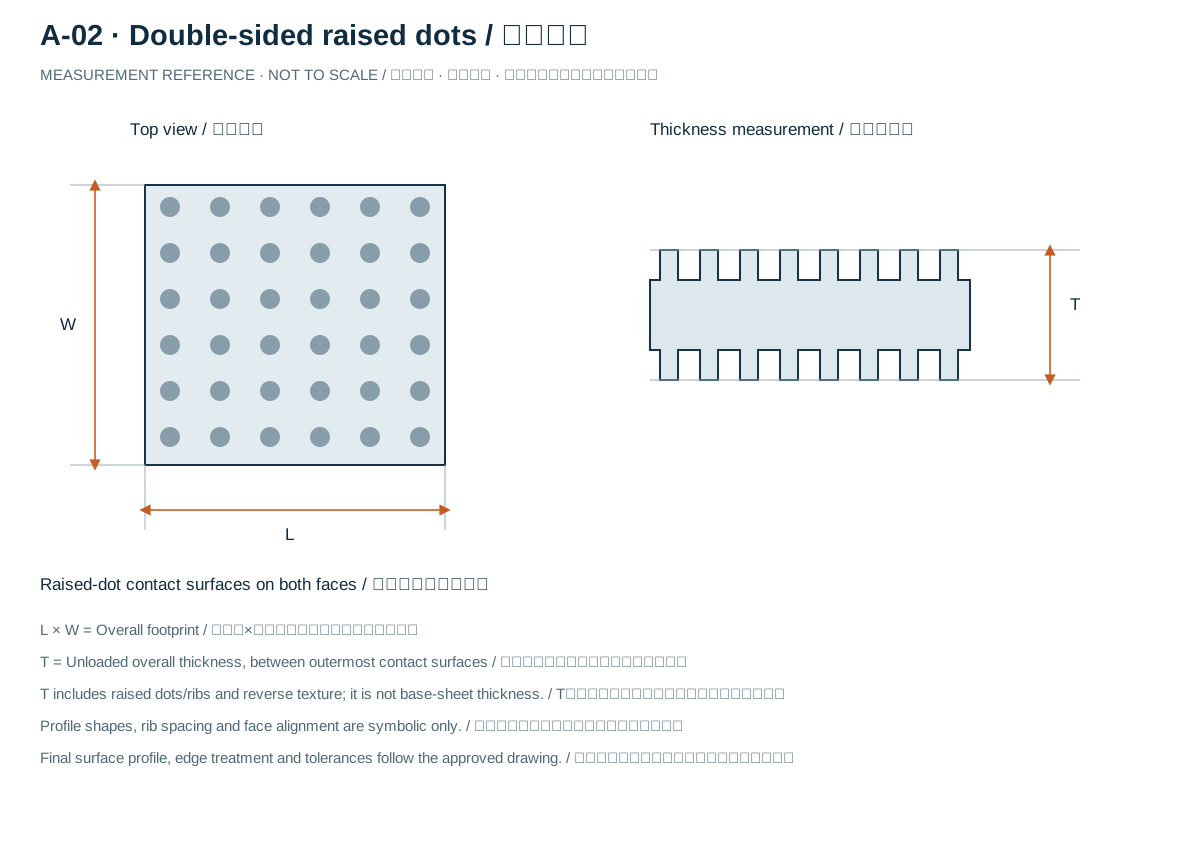 Tap diagram to view full size ↗
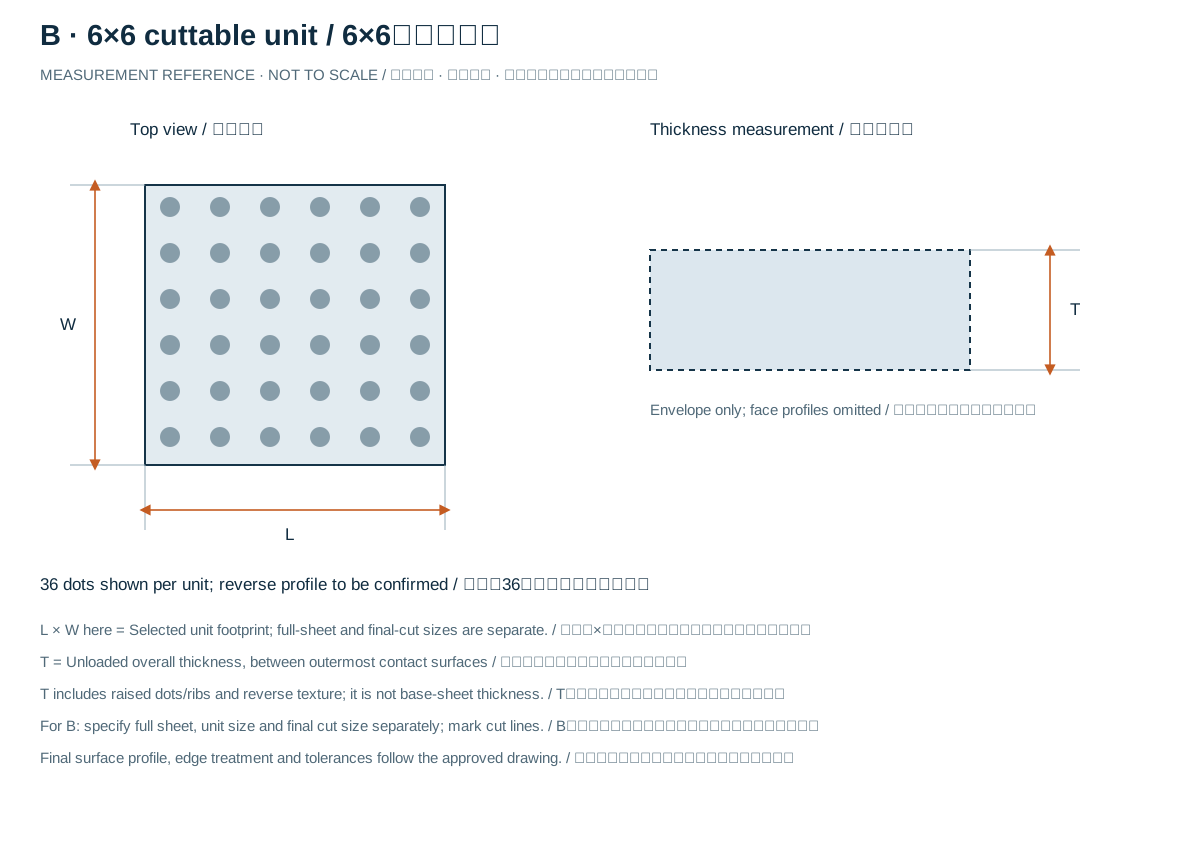 Tap diagram to view full size ↗
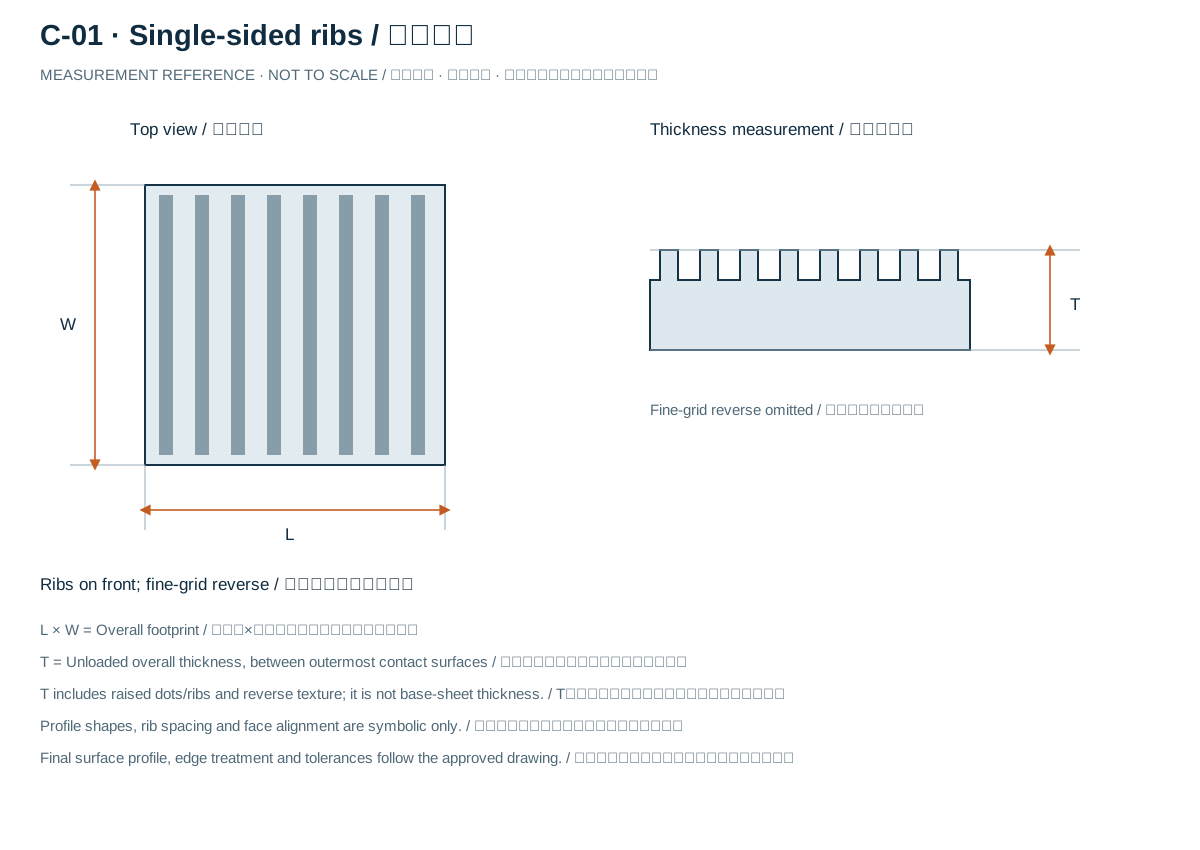 Tap diagram to view full size ↗
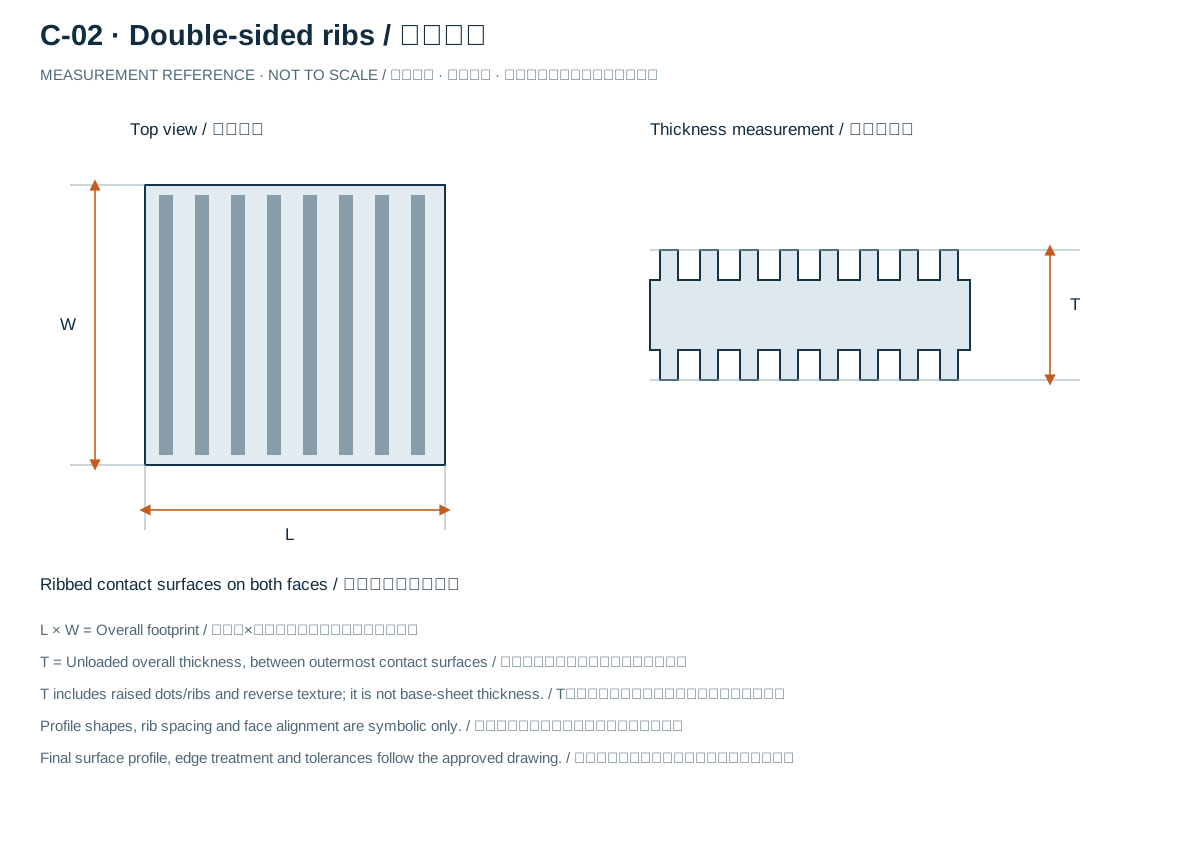 Tap diagram to view full size ↗
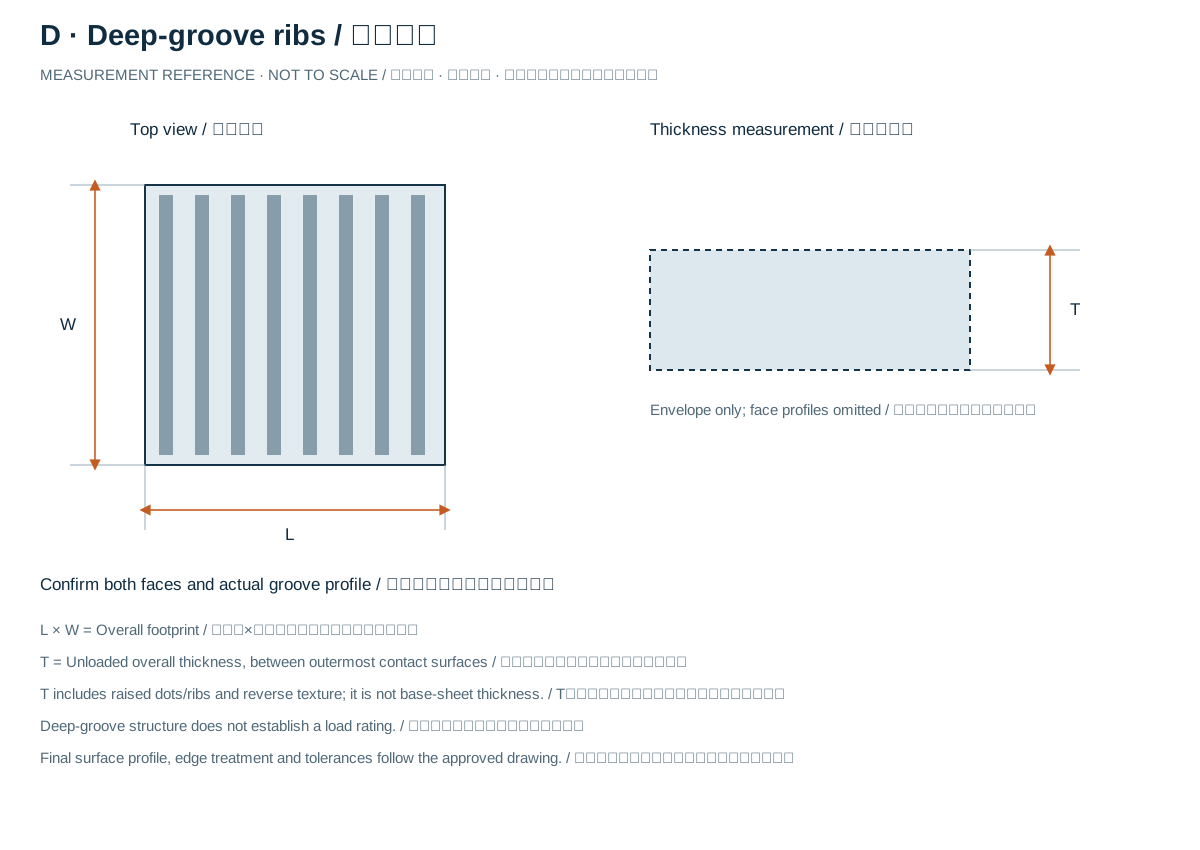 Tap diagram to view full size ↗
For type B, specify full-sheet, unit and final-cut dimensions separately, with cut lines and edge requirements. Crest shapes, spacing and face alignment are symbolic; unconfirmed face profiles for B and D are not inferred. Actual dimensions, tolerances and surfaces follow the approved drawing. These references do not establish load or isolation ratings.
Product documents
Compare six structures, review reference dimensions and prepare the information needed for a quotation. Final specifications are confirmed by order.
Send length, width, thickness and tolerances with your inquiry.
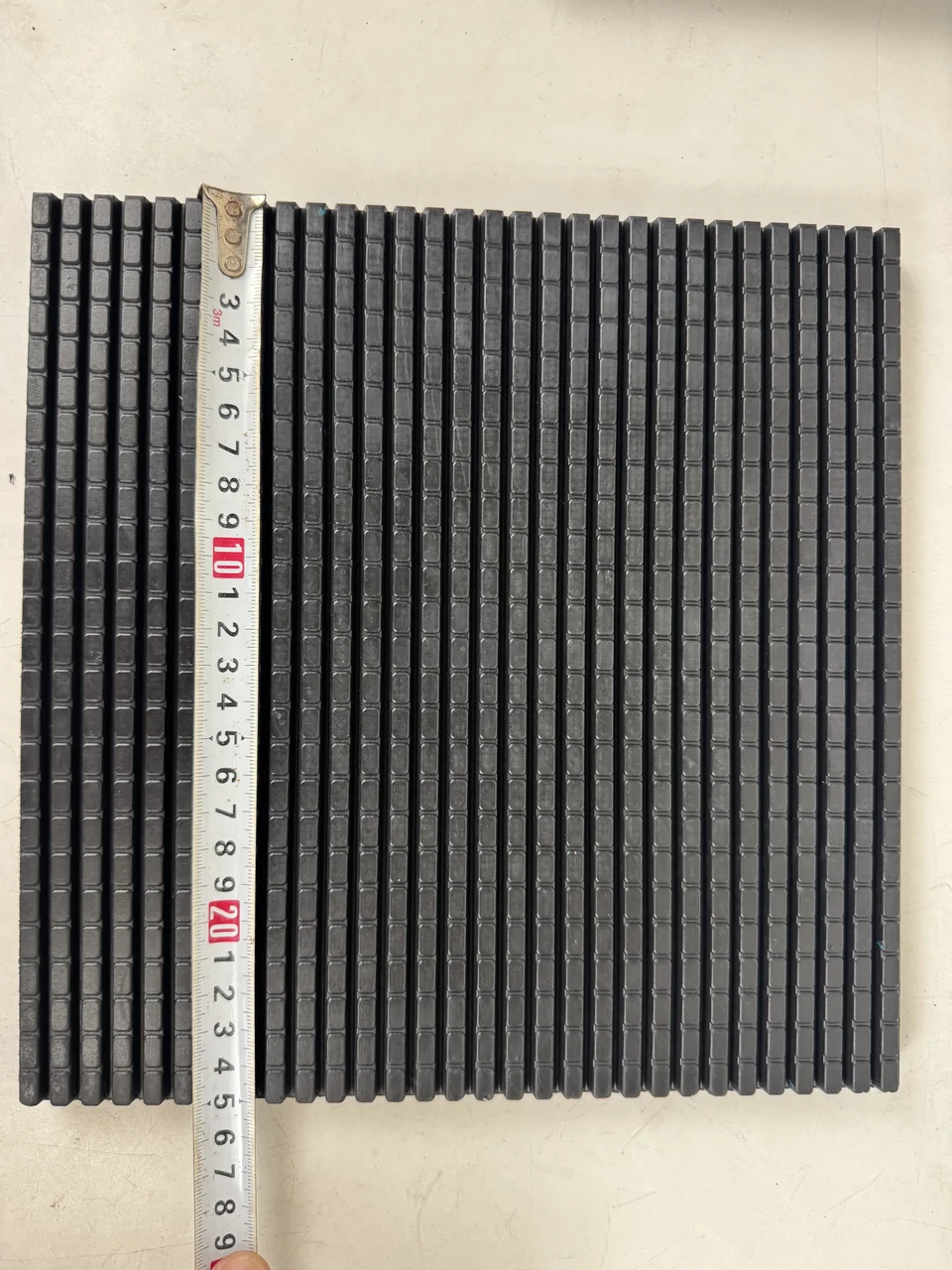
For engineering review
Length, width and thickness, plus any required cutting or hole arrangement.
Equipment weight and the expected load carried by each pad or support point.
Equipment type, installation position and the movement or cushioning concern.
Indoor or outdoor use and relevant oil, weather, temperature or chemical exposure.
Existing specification when available, or the conditions needed for material review.
Trial quantity, production quantity and any packing or delivery requirement.
Application starting points
Suitability depends on the installation, operating conditions and the information supplied for review.
Start with the available information
Share the requirement for a practical review. If the exact product family is unclear, choose “Not sure — need engineering review” in the inquiry form.
1F, Building 1, Chuangye Industrial Park,
No. 13 Hongsan Avenue, Hongchou Town,
Tiantai County, Taizhou, Zhejiang, China
Selection & purchasing guides
Guides to compare structures, check dimensions and prepare application details.
Six pad structures, reference dimensions and measurement steps.
Read guide →Five interfaces, thread dimensions and installation requirements.
Read guide →Compare contact surfaces and connections to choose a starting point.
Read guide →Drawings, specifications, quantities and a ready-to-use inquiry template.
Read guide →Measure rubber height, overall height and both mounting connections.
Read guide →Compare NR, EPDM and NBR and prepare your service conditions.
Read guide →Read hardness values, tolerance notation and testing requirements.
Read guide →