End connections
VE, VV, DD, DE or VD; specify both ends.
Threaded rubber-to-metal mounts for industrial equipment
Compare five rubber-to-metal mount connections: male stud, female thread and plain rubber end combinations. For a replacement or a new installation, send a drawing or photos of both ends, the rubber-body dimensions, thread details and quantity. Include the equipment load and operating conditions so we can review the requirement before quoting.
Have only a sample or photos? Send the details you have and mark unknown dimensions as unknown.
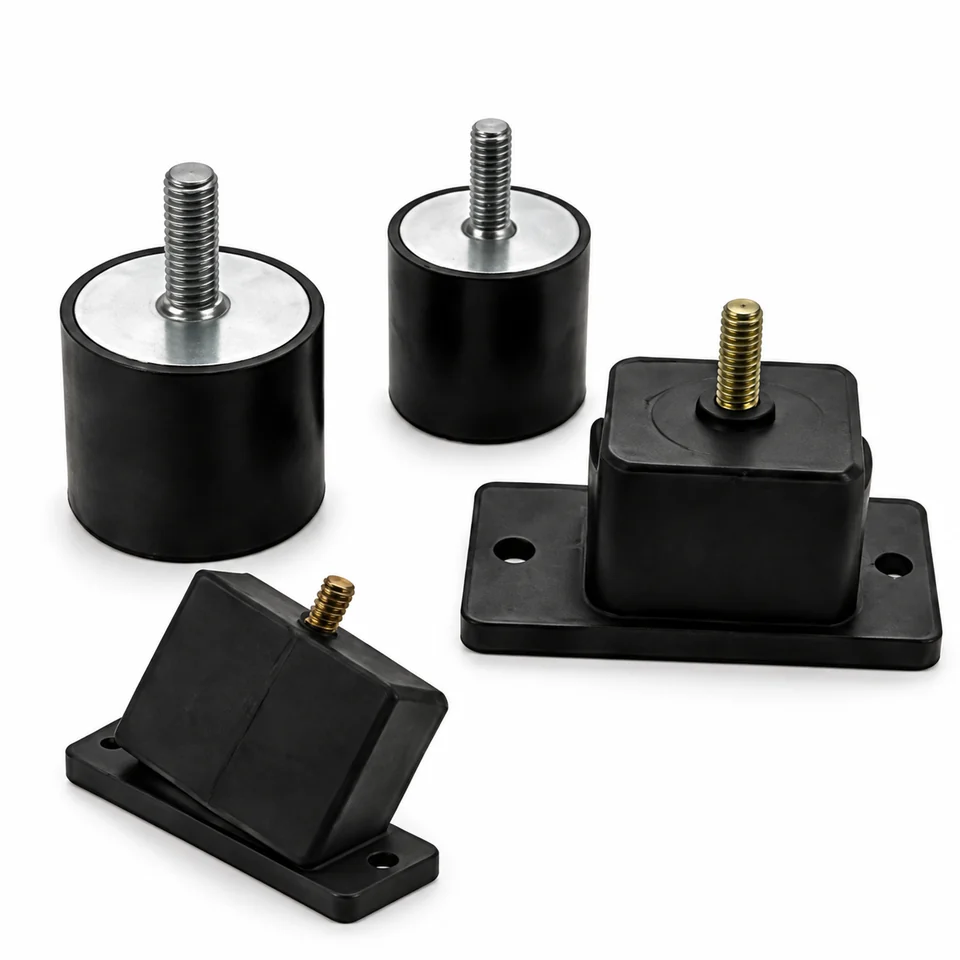
Use this checklist to describe a replacement or a new installation.
VE, VV, DD, DE or VD; specify both ends.
Diameter or footprint, unloaded rubber height and overall free height.
Size, pitch and exposed stud length or usable full-thread depth at each threaded end.
Include your specified rubber compound and Shore A hardness, if available.
Equipment weight, mount positions and loading direction; operating speed, temperature and exposure to oil or chemicals, where known.
Quantity, destination and required tolerances.
Choosing a compound? Compare NR, EPDM and NBR for your operating conditions. If hardness is specified, check the Shore A hardness and tolerance requirements.
Final dimensions, compound, hardness and suitability are confirmed against the approved drawing and operating requirements.
Send Your Mount DetailsReplacing an existing mount? Compare both end connections first, then use the measurement diagrams to record the rubber-body dimensions and each threaded end. For a new installation, include a drawing of the mounting arrangement so the connections and available space can be reviewed together.
Bilingual measurement references for five interfaces. Not to scale; for inquiry preparation only. Confirm rubber-body height, overall free height and each threaded end separately against the approved drawing.
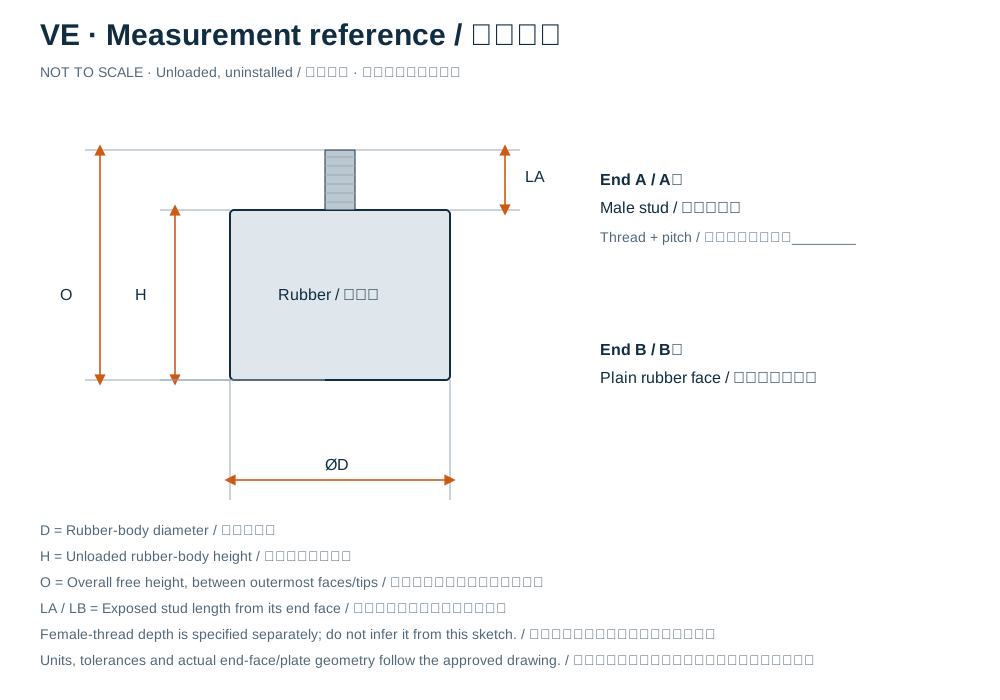 Tap diagram to view full size ↗
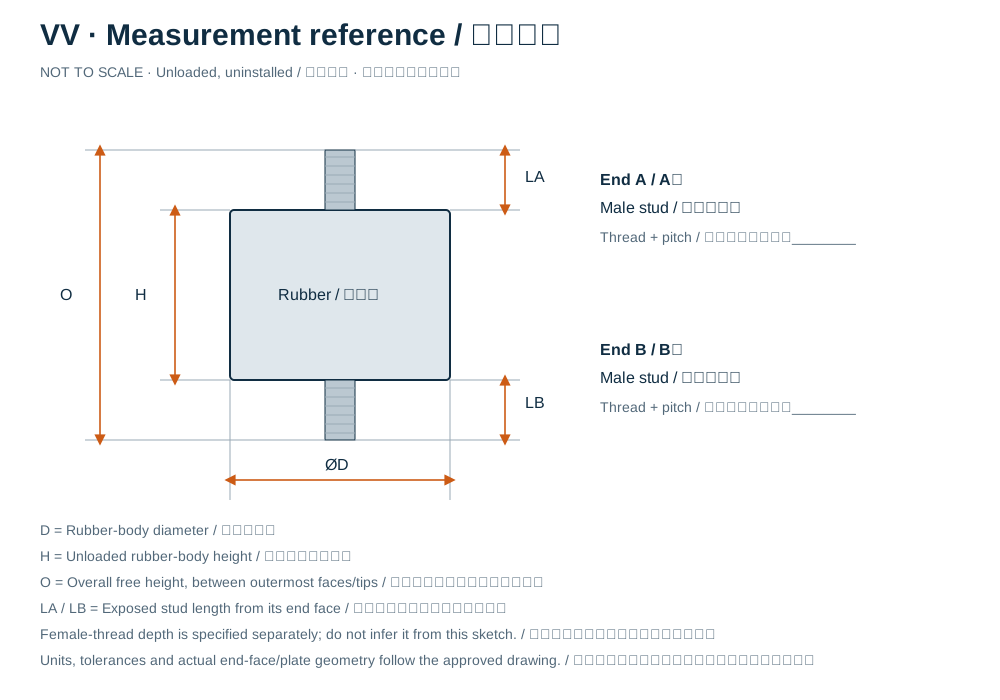 Tap diagram to view full size ↗
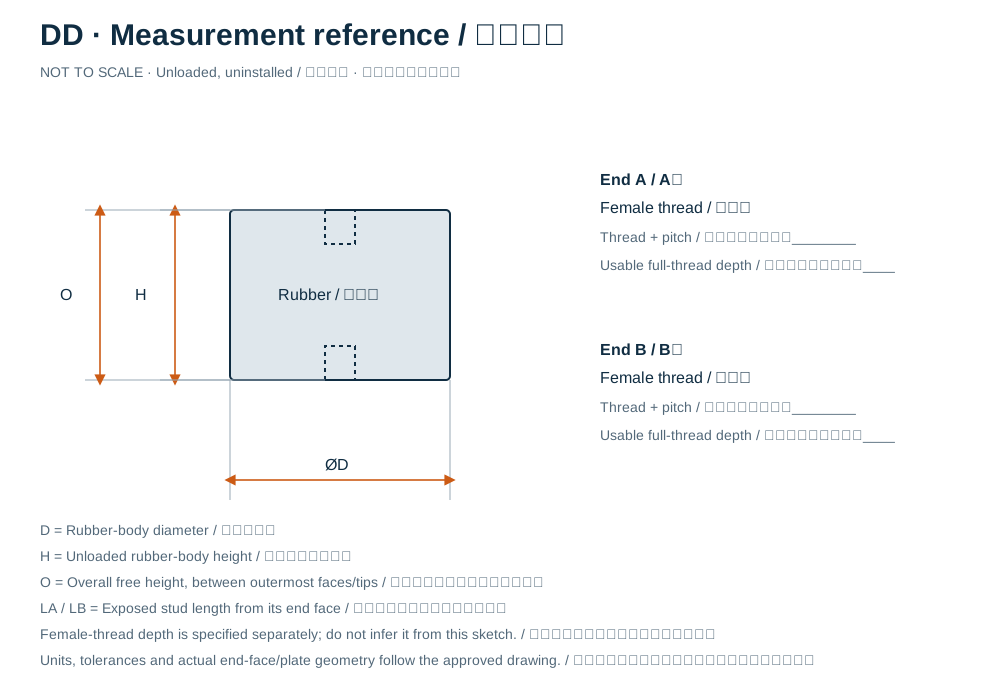 Tap diagram to view full size ↗
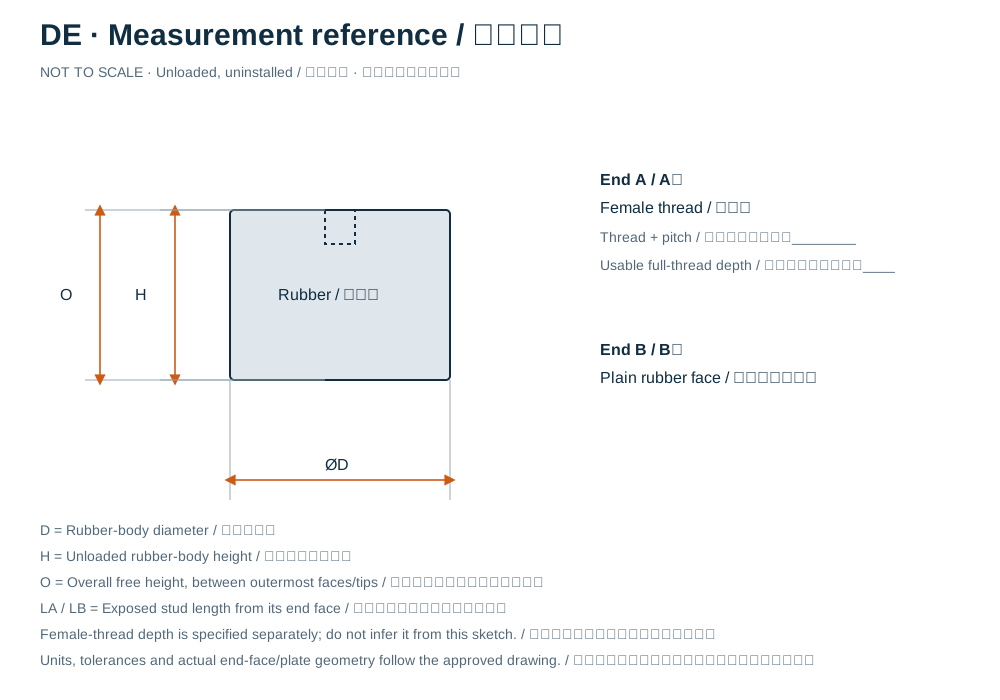 Tap diagram to view full size ↗
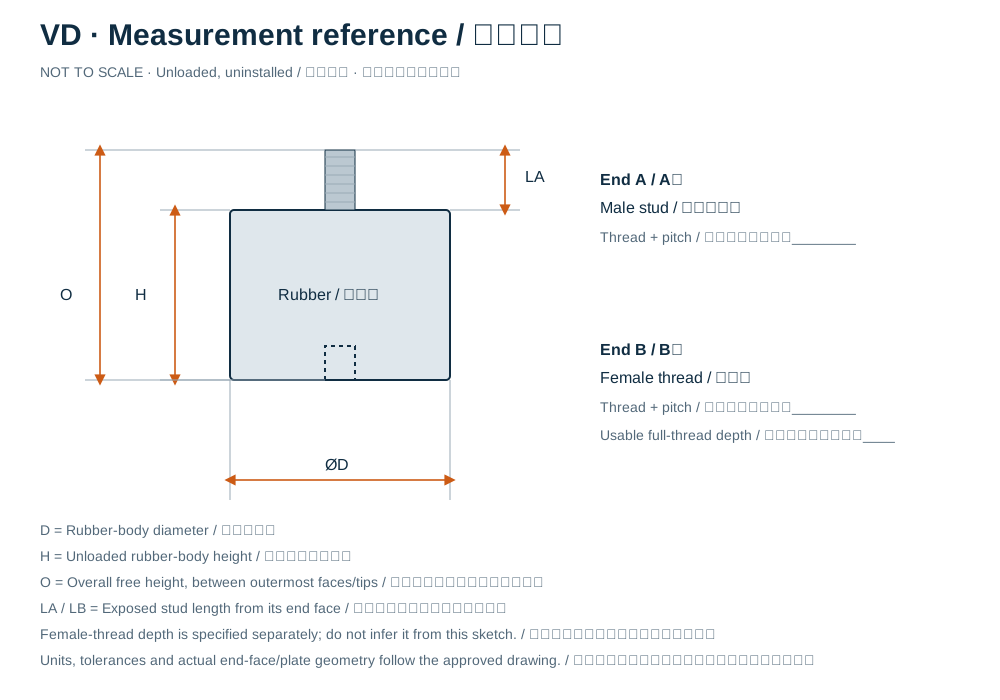 Tap diagram to view full size ↗
Dashed female-thread symbols indicate connection locations only, not actual blind-hole or metal-part geometry. Usable full-thread depth is not thread pitch; do not infer it from the sketch. Units, tolerances and end-face geometry follow the approved drawing.
Product documents
Compare five mounting interfaces, review catalog size examples and prepare thread, load and application details for a quotation. Final specifications are confirmed by order.
For engineering review
Use the specification checklist above, then prepare these three items for your inquiry:
Show both end connections and mark the measurements you know. For a replacement, include a photo of the mount in its installation.
Describe the equipment, mounting arrangement and operating conditions. Include load information and any material, hardness or tolerance requirements.
State the trial-order or production quantity and delivery destination. Mark missing information as unknown so it can be clarified during review.
Photos help identify the structure; final specifications follow the approved drawing or order requirements.
Start Your Mount InquiryApplication starting points
Reviewing a mount for a pump, motor, fan or compressor? Send the mounting layout, equipment weight and operating speed with your drawing or photos. Suitability must be checked for the specific installation.
Start with the available information
Share the requirement for a practical review. If the exact product family is unclear, choose “Not sure — need engineering review” in the inquiry form.
1F, Building 1, Chuangye Industrial Park,
No. 13 Hongsan Avenue, Hongchou Town,
Tiantai County, Taizhou, Zhejiang, China
Selection & purchasing guides
Guides to compare structures, check dimensions and prepare application details.
Six pad structures, reference dimensions and measurement steps.
Read guide →Five interfaces, thread dimensions and installation requirements.
Read guide →Compare contact surfaces and connections to choose a starting point.
Read guide →Drawings, specifications, quantities and a ready-to-use inquiry template.
Read guide →Measure rubber height, overall height and both mounting connections.
Read guide →Compare NR, EPDM and NBR and prepare your service conditions.
Read guide →Read hardness values, tolerance notation and testing requirements.
Read guide →